YOUR TRUSTED AGENCY FOR ROI-DRIVEN DIGITAL MARKETING
By Jeffery Morgan
Customer activation is the crucial moment when a new customer truly becomes engaged with your product or service.
In this article, Jeff MacGurn, Chief Client Officer, will dive into the strategies and channels that can help you effectively activate your customers, turning them from casual buyers into loyal advocates.
What You’ll Learn
- What is Customer Activation?
- Key Strategies for Customer Activation
- Measure Your Customer Activation Efforts
- Tools and Platforms
- Best Practices for Successful Customer Activation
My Expert Insight on Customer Activation
Customer activation isn’t just a step in the funnel, it’s the turning point where interest becomes momentum.
When brands create frictionless onboarding, deliver timely messaging, and personalize the experience across every touchpoint, they give new users a clear path to value.
The companies winning today understand that activation thrives at the intersection of data, creativity, and consistency. They leverage everything from in-app nudges and push notifications to direct mail and experiential campaigns to spark real engagement.
And most importantly, they measure what matters: conversion rates, behavior patterns, and customer satisfaction, then iterate relentlessly. When you pair strong activation strategies with a deep understanding of your audience, you don’t just drive short-term actions; you build long-term loyalty, advocacy, and lifetime value.
Action Item: Take a deep dive into your customer onboarding process. Are you setting them up for success? Are you providing the necessary information to help them get started? Small tweaks can make a big difference in customer activation.
What is Customer Activation?
Customer activation is the crucial moment when a new customer truly “gets” your product or service and starts using it regularly.
Think of it as the bridge between making a purchase and becoming a loyal customer. The goal is to help new users discover the value you offer and encourage them to take that first important step. Whether it’s signing up for a newsletter, trying a free trial, or making a repeat purchase, activation is the engine that drives customer lifetime value.
To achieve this, you need a multi-faceted approach that leverages various channels and strategies. Let’s dive into some of the most effective ones.
It’s important not to confuse customer activation with other concepts like customer acquisition and retention. While acquisition refers to attracting new customers and customer retention applies to keeping those customers loyal over time, customer journey activation is all about bringing a new customer on board with your offerings.
Activation in Advertising
An activation strategy is crucial to any ad campaign in a number of ways. For example, customer activation can help with:
- Driving immediate action: Activation in advertising has the ability to move audiences past the brand awareness stage and into sales and signups, among other actions that effectively move them through the sales funnel.
- Engaging customers: Customer journey activation also emphasizes personalization and interactivity, getting customers to connect more directly and enthusiastically with your brand.
- Increasing brand visibility: Your customer activation strategy can encourage more people to talk positively about your brand to others, helping you increase brand awareness by word-of-mouth.
- Building loyalty and advocacy: Creating memorable and enjoyable experiences for customers will make them more loyal and recommend your brand to others.
Brand Activation Examples
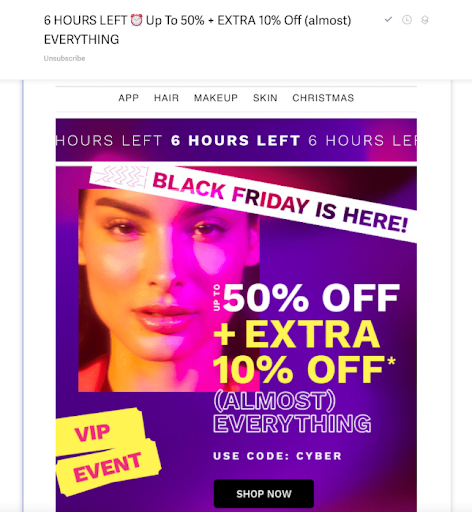
There are also multiple types of activation-focused ads. Here are some marketing activation examples of ads that really work to drive immediate action:
- Limited-time offers: Ads can generate a fear of missing out (FOMO) and overall urgency to drive more immediate sales, with messaging like “Sale Ends Soon!” or “Don’t Wait Till It’s Gone!”
- Experiential marketing: These campaigns use events like pop-up shops and event booths with product demos and brand interactions that create a highly memorable experience.
- Free samples or product trials: Promotions could enable customers to try services or products for free, encouraging people to dive into an experience and see if it’s right for them.
- Treasure hunts and gamification: Turning a purchase into a kind of game can help you create a stronger connection with your customers and entice them to buy, especially with the possibility of earning giveaways, discounts, or other prizes.
- Calls to action that emphasize action: Using effective CTAs with direct action verbs in ads could drive more conversions, with messaging like “Shop Now” and “Register Today” to complement ads with softer CTAs.
The Importance of Measuring Activation-Focused Ad Campaigns
To get the results you want based on your goals, you must consistently measure the performance of your activation strategy. The kinds of metrics and key performance indicators (KPIs) you measure will depend on the goals you have, whether you want to facilitate more consistent engagement, retain more customers, encourage brand advocacy, or more.
In measuring your campaigns, you may track the following metrics:
- Sales lift: Determines whether there was an increase in sales because of activation-focused ads.
- Conversion rates: Tracks the number of people who take a desired action after encountering an ad.
- Social media metrics: Measure shares, likes, user-generated content metrics, and more to gauge effectiveness.
- Return on investment (ROI): Compares the total revenue that a campaign generates against the investment needed to run it.
Developing a Customer Activation Strategy
For successful customer activation, you need to develop an effective activation strategy, which involves the following critical steps:
1. Define Your Goals and Corresponding Metrics
Clearly indicate what activation is for your business, which will be a measurable action that you can count toward a specific goal. KPIs here might include your customers’ activation rate, time to activate, and churn rate, which measures the number of people who stop using a product.
2. Research Your Audience and Map the Customer Journey
Look into your audience, segmenting different groups with specific audience personas. You can also engage in customer journey mapping to see how people engage with your brand from initial interaction to retention.
A clear picture of the customer journey activation process will help eliminate any bottlenecks that might otherwise keep your customers completing a desired action.
Knowing all about customer behavior and preferences will help you tailor your messaging to speak more directly with audiences and drive conversions.
3. Streamline the Onboarding Process
It should be easy for your customers to connect with your offerings and realize their full potential. Generally, a frictionless experience will keep more people moving along and encourage more sustained engagement.
In developing your onboarding process, keep things simple and straightforward, provide contextual tooltips, add checklists, and provide users with a progress bar to indicate where they’re at.
4. Use a Combination of Customer Activation Platforms and Marketing Channels
Fully equip your campaigns with the right customer activation platform that guides users through their journey while also using a reliable digital marketing media mix to reach your audiences at every potential touchpoint.
For instance, you could use in-app messaging, email, social media, and push notifications to connect with your audiences.
About Clicks Wave Media
Clicks Wave Media is a premier full-service digital marketing agency. We were founded in Bogura, Bangladesh, but are now a 100% remote-first company with Clicks Wave Team and clients around the globe.
Clicks Wave Media is one of the highest awarded digital marketing agencies in the industry, works with some of the biggest brands in the world and is a 6x Inc. 5000 company.
Our Services
Clickswave Media offers Award-Winning Services including comprehensive full-funnel digital marketing strategies. Learn more about our most popular service offerings below:

 Our Popular Blogs
Our Popular Blogs
 Free Marketing Resources
Free Marketing Resources